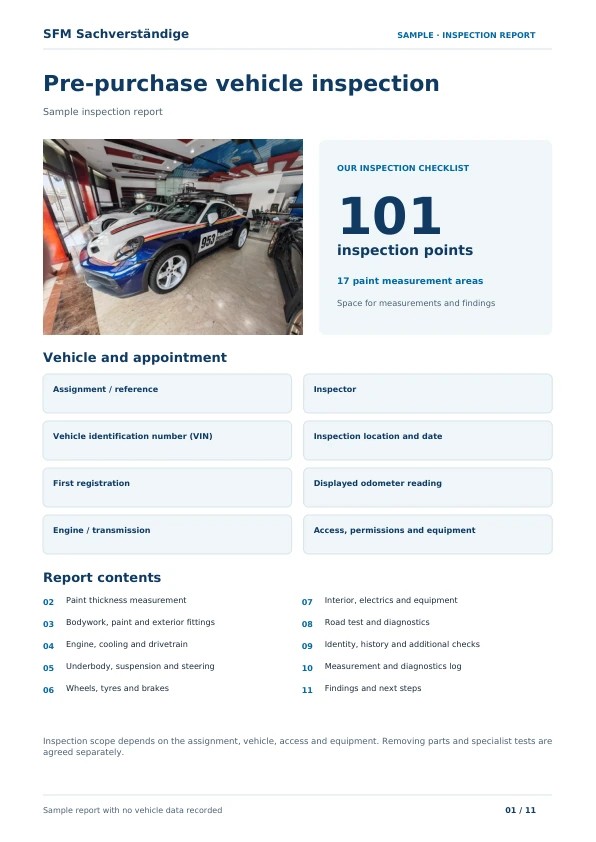
Pre-purchase vehicle inspection
101 inspection points
How we inspect vehicles on site, from paint thickness measurements and mechanical checks to the underbody and road test.
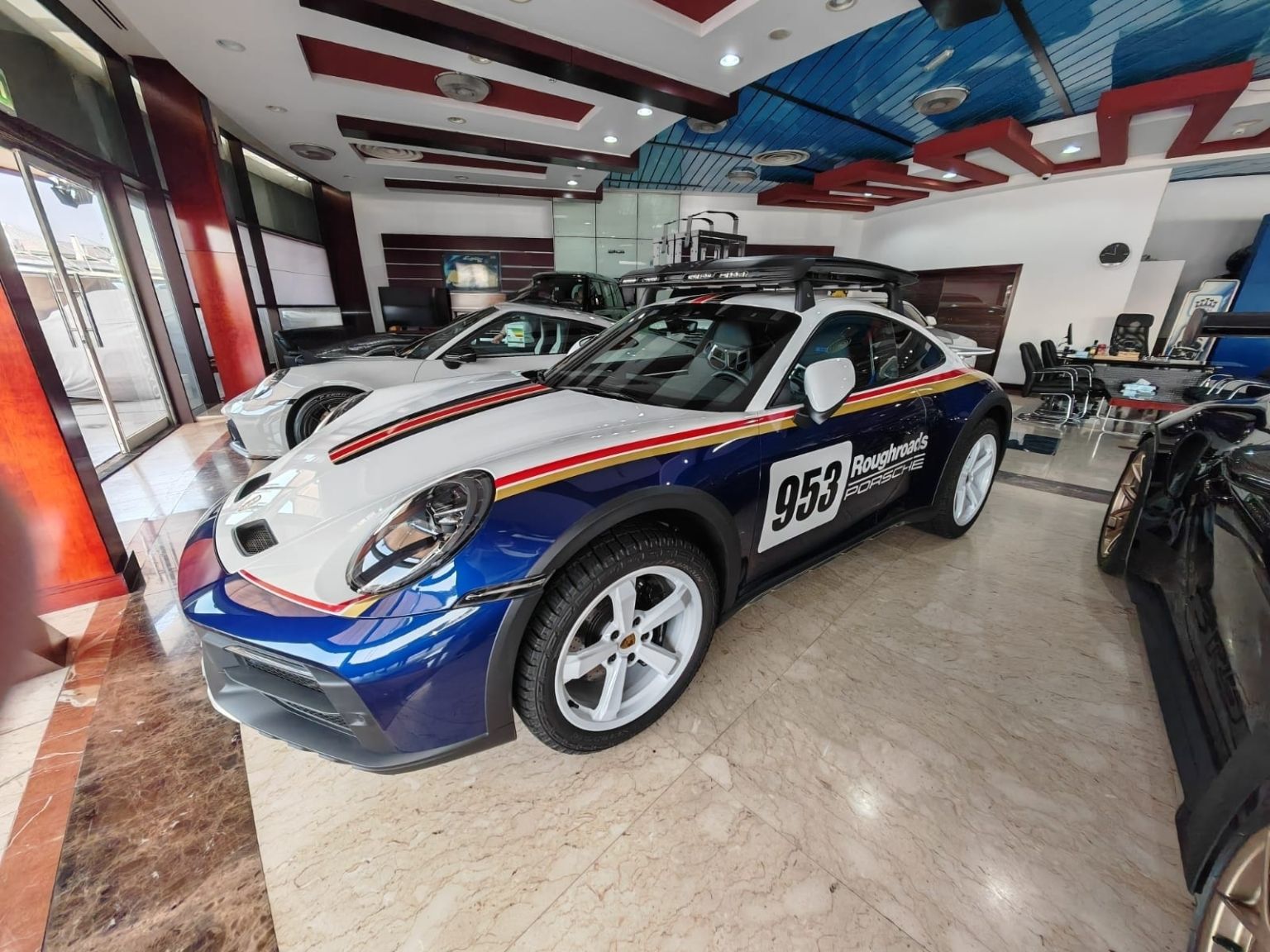
How we document the vehicle
These three illustrations show how an inspection works. Its scope depends on the assignment and what is accessible on site.
Photographic documentation
Overview photos record the condition. Close-ups capture anything that warrants attention.
Paint thickness measurement
Readings are recorded by panel and checked for unusual differences.
Underbody
If a lift is available, we check accessible areas for visible signs of damage or wear.
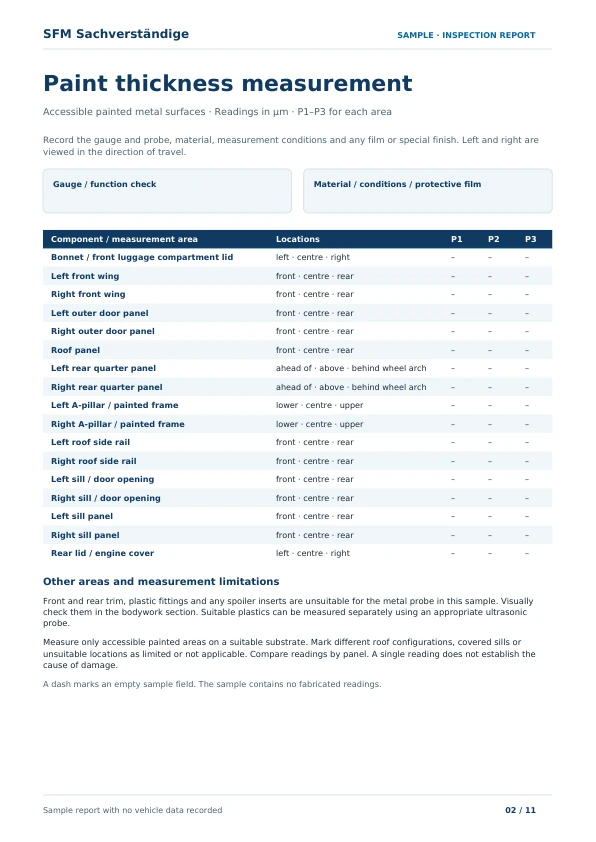
Paint thickness, panel by panel
Up to three readings are planned for each accessible painted metal area. The log includes the bonnet, wings, doors, roof, rear quarter panels, door openings and rear lid.
Front and rear plastic trim is assessed visually in this sample report. Measuring paint on plastic requires an appropriate method such as an ultrasonic probe.
| Component | Measurement points |
|---|---|
| Bonnet | left · centre · right |
| Front wing, each side | front · centre · rear |
| Roof panel | front · centre · rear |
| Rear lid | left · centre · right |
Show all 17 paint measurement areas
| Component | Location | P1 | P2 | P3 |
|---|---|---|---|---|
| Bonnet / front luggage compartment lid | left · centre · right | — | — | — |
| Left front wing | front · centre · rear | — | — | — |
| Right front wing | front · centre · rear | — | — | — |
| Left outer door panel | front · centre · rear | — | — | — |
| Right outer door panel | front · centre · rear | — | — | — |
| Roof panel | front · centre · rear | — | — | — |
| Left rear quarter panel | ahead of · above · behind wheel arch | — | — | — |
| Right rear quarter panel | ahead of · above · behind wheel arch | — | — | — |
| Left A-pillar / painted frame | lower · centre · upper | — | — | — |
| Right A-pillar / painted frame | lower · centre · upper | — | — | — |
| Left roof side rail | front · centre · rear | — | — | — |
| Right roof side rail | front · centre · rear | — | — | — |
| Left sill / door opening | front · centre · rear | — | — | — |
| Right sill / door opening | front · centre · rear | — | — | — |
| Left sill panel | front · centre · rear | — | — | — |
| Right sill panel | front · centre · rear | — | — | — |
| Rear lid / engine cover | left · centre · right | — | — | — |
Measurement fields are blank in the sample.
Our 101-point checklist in detail
From traces of oil in the engine bay to stored fault codes, each check has a status in the report. Access, equipment and permissions determine the actual scope.
Bodywork, paint and exterior fittings15 inspection points
- Painted surfacesLook for scratches, stone chips, dents, dull patches and differences in colour or texture.
- Signs of repaintingCheck for overspray, masking edges, inclusions, sanding marks and transition lines.
- Panel gaps and alignmentCompare lids, doors, wings, quarter panels and trim side to side.
- FastenersInspect accessible bolt heads, hinges and brackets for tool marks or signs of removal.
- Folds, seams and edgesAssess seam sealer, joints, edge protection and visible signs of repair.
- Front and rear trimCheck for cracks, distortion, scuffs, uneven panel gaps and visible damage to mounts.
- Mirrors, trims and coversRecord fixings, breaks, scuffs and missing parts.
- Sills and wheel archesInspect lower edges, wheel housings and areas prone to ground contact for damage.
- Glass and glass markingsRecord chips, cracks, scratches and visible signs of installation work.
- Headlights and rear lightsCheck lenses and housings for damage, moisture and unusual fit.
- Seals and drainsInspect door and lid seals, accessible drains and signs of water ingress.
- Openings and latchesCheck doors, front and rear lids, fuel flap and emergency releases where accessible.
- Roof equipment and spoilersCheck the sunroof, roof panel and active rear spoiler where fitted.
- Corrosion and ageingDocument corrosion on relevant metal areas, corrosion beneath coatings and galvanic corrosion.
- Modifications and wrapsDocument add-on parts, wraps and protective film. Identify covered areas.
Engine, cooling and drivetrain14 inspection points
- Traces of oil in the engine bayCheck visible covers, housings and lines for oily film, seepage or fresh drops.
- Oil levelFollow the manufacturer’s procedure using the appropriate display or dipstick. Record measurement conditions.
- Coolant level and leaksCheck under suitable operating conditions. Inspect the reservoir, hoses and visible connections.
- Radiators and air intakesInspect air intakes, accessible heat exchangers and fans for damage, dirt and visible leaks.
- Brake fluid levelCheck the reservoir and visible level where accessible. Test the boiling point separately.
- Hoses and linesInspect visible coolant, fuel and vacuum lines for chafing, cracks or moisture.
- Charge-air and intake systemCheck accessible pipes, clamps, connections and brackets. Pressure-test separately.
- Belt driveWhere visible, look for fraying and cracks and listen for noise.
- Engine and gearbox mountsCheck visible mounts for damage. Note unusual vibrations when starting or moving off.
- Cold startObserve cranking time, noise, exhaust, warning lights and idle. Flag an unverified cold start if the car is already warm.
- Warm-up and hot restartObserve the temperature display, idle, restart and unusual noises.
- Gearbox and clutchOn PDK, observe engagement of D and R, pull-away and gear changes. On manual gearboxes, check clutch operation and gear selection.
- Exhaust systemCheck visible mounts, shields, corrosion and soot marks. Record unusual noises.
- After the road testRecheck accessible areas for fresh leaks, unusual smells or warning messages.
Underbody, suspension and steering16 inspection points
- Underbody panelsInspect mountings, scratches, grounding marks, cracks and loose panels.
- Floor panels and longitudinal membersCheck accessible areas for deformation, corrosion and visible evidence of repairs.
- Jacking points and sillsInspect jack and lift points for indentations, deformation and cracks.
- Subframes and mountingsInspect front and rear subframes, visible bolts and mounting points.
- Control arms and bushesCheck for cracks, deformation or excessive play with the suspension suitably unloaded.
- Ball joints and locating jointsAssess boots and play using an appropriate method and vehicle support.
- Springs and dampersInspect springs, bump stops, dust boots, damper bodies and any oil leakage.
- Front axle liftIf fitted, check lifting and lowering to manufacturer specifications. Observe displays and warnings.
- Anti-roll bars and drop linksCheck mounts, boots and fixings for abnormalities.
- Steering rack and tie rodsCheck boots, fasteners and unusual play. Record steering feel on the road test.
- Driveshafts and jointsCheck boots for cracks or grease traces and make sure the clamps are secure.
- Engine, gearbox and final drive from belowInspect accessible housings, joins and sealing areas for oil seepage or fresh drops.
- Brake and fuel linesInspect visible lines, brackets and hoses for corrosion, chafing, kinks and moisture.
- Exhaust and heat shieldsRecord dents, visible leaks, loose shields and mountings.
- Wheel bearings and wheel clearanceWith the wheel suitably unloaded, check play, running noise and visible signs of contact.
- Covered areasList hidden areas in the report. Remove parts only by agreement and with permission.
Wheels, tyres and brakes14 inspection points
- Tyre identification by wheelRecord make, model, size, load and speed ratings, DOT code and direction of rotation.
- Tyre approvalsCheck the fitted combination against available documentation. Record the Porsche N-marking where applicable.
- Tread depth by wheelMeasure inner, centre and outer tread. Record each of the four wheel positions separately.
- Tyre damageInspect visible tread and sidewalls for cracks, bulges and embedded objects.
- Wear patternRecord uneven wear, heel-and-toe wear or flat spots. Investigate causes separately.
- Wheel rimsCheck visible areas for kerb damage, cracks, distortion and signs of repair.
- Fixings and accessoriesRecord unusual details on visible wheel fasteners, spacers, locking bolts and accessories.
- Tyre pressure and TPMSRecord pressure at a suitable temperature. Check the tyre pressure monitoring display and warnings.
- Brake discsCheck visible faces for grooves, lip formation, cracks, corrosion and uneven pad contact.
- Brake padsRecord remaining inner and outer pad thickness where accessible. Flag pads that cannot be seen.
- Brake calipers and hosesCheck for visible damage, moisture, chafing and leaks.
- Parking brakeCheck application, release and indicators. Check holding performance only if it can be done safely.
- Pedals and floor matsCheck pedal pads, travel and return while stationary. Check that the driver’s mat is correctly positioned and secured.
- Detailed brake testingMeasure disc thickness only with adequate access and specifications. Assess roller testing and ceramic brakes separately.
Interior, electrics and equipment16 inspection points
- Interior and moistureDocument upholstery, carpets, headlining, odours, moisture and visible wear.
- Luggage compartment and storageCheck the front luggage compartment, trim, visible wells and accessories.
- Seats and head restraintsCheck mechanical or electric adjustment, locking, memory, heating and ventilation where fitted.
- Seat beltsCheck condition, retraction and buckles. Inspect accessible child-seat anchorages.
- Instrument cluster and warningsCheck displays at ignition-on and start-up. Record abnormalities.
- Central locking and keysCheck available keys, remotes, entry systems and locking.
- Windows, mirrors and roofTest windows, mirror adjustment and folding, and the sunroof if fitted.
- Exterior lightsCheck dipped and main beam, indicators, hazard lights, brake, reversing and number plate lights as fitted.
- Interior lightsOperate interior and reading lights, door switches and any luggage compartment or ambient lighting.
- HornBriefly operate the horn from the driver’s seat and check that it works.
- Wipers, washers and demistingCheck operation, spray pattern and accessible heating and demisting functions.
- Air conditioning, heating and fanObserve operation, air distribution, change in temperature and noises.
- Infotainment and connectionsCheck the screen, controls, audio, navigation, phone connection and available ports.
- Parking aids and cameraWhere fitted, check the display, picture and signals in a safe close-range area.
- Driver assistanceRecord availability, displays and visible error messages. Check calibration separately.
- 12 V batteryInspect accessible terminals and fixings. Record load or conductance tests separately.
Road test and diagnostics13 inspection points
- Driving conditionsRecord route, duration, temperature, road profile and initial conditions.
- Pull-away and load changesObserve response, judder, hesitation and unusual noises.
- Gear changesCheck upshifts, downshifts, manual mode, pull-away and low-speed manoeuvres as appropriate for the gearbox.
- Straight-line running and steering wheel positionAssess on a suitable road without interference from side winds or the road surface.
- Steering and manoeuvringCheck steering return, stiffness, noise and other issues during slow manoeuvres.
- Noise and vibrationRecord how they vary with wheel speed, engine speed, load and road surface.
- Suspension and driving modesObserve the response to bumps and the effect of available settings.
- Braking on the road testDuring normal braking in safe conditions, record pedal feel, judder, noises and pull to one side.
- Stored fault codesQuery accessible modules such as engine, gearbox, ABS/ESP, airbag and body control.
- Diagnostic recordRecord the tool and scope, accessible modules, status, fault codes and available freeze-frame data.
- Emissions readiness and live dataRecord readiness, temperature readings and relevant operating data where meaningful and available.
- Model-specific diagnosticsUse a suitable tool to read and assess available operating hours, over-rev data or other model-specific values.
- Diagnostic limitationsFlag inaccessible modules. Leave fault codes intact. A clear fault memory does not replace a functional check.
Identity, history and additional checks13 inspection points
- Vehicle identification numberCompare the VIN on the vehicle with the registration papers and available documents.
- Vehicle details and equipmentCheck the model, first registration, drivetrain, gearbox, equipment and documented modifications.
- MileageCompare the odometer with service records, inspection reports, available diagnostic data and mileage records from the vehicle history.
- Maintenance and repairsRecord service history, invoices, intervals, outstanding maintenance and repairs.
- Previous damage and historyRetrieve a carVertical report using the VIN. Compare recorded damage with the seller’s statements, documents and vehicle findings.
- Registration and importReview available registration documents, the CoC, import/export information and relevant supporting documents as agreed.
- Service campaigns and recallsCheck VIN-specific status with an available manufacturer source and note when the data was issued or checked.
- Accessories and supplied itemsRecord the number of keys, tool kit, breakdown kit and agreed accessories.
- Wheel alignment and test benchArrange separate checks of wheel alignment, brake forces, lighting or dampers if needed.
- Detailed engine checksArrange compression, leak-down, borescope, oil sampling or smoke and pressure tests separately using appropriate procedures.
- Specialist diagnosticsArrange coolant pressure, brake fluid boiling point, 12 V battery or ADAS calibration checks separately.
- Electric or hybrid vehiclesThis module does not apply to the sample 911. For suitable vehicles, optional checks include a high-voltage visual inspection, charging operation and a separate battery state-of-health test.
- Condition, open questions and likely workRank findings, link photos and agree any additional checks or cost estimate needed.
Vehicle history with carVertical
We use the VIN to obtain a carVertical report and compare available records with the vehicle’s documents and our on-site findings.
Available records vary. We note discrepancies and gaps in the inspection report.
- Accident and damage records
- Compare these with repair records, paint thickness readings and visible signs of work.
- Mileage history
- Compare earlier readings with the odometer, service records and inspection reports.
- Previous countries of registration
- Check available information against registration and import documentation.
PDF · 11 pages
What the report looks like
The report includes vehicle details, a paint thickness log, a technical checklist and space for findings, photo references and open questions.
Download the sample report as PDF